How 10-8 Systems CAD works
Follow the 10-8 Systems Computer-Aided Dispatch (CAD) workflow from call intake and response plans to field updates, multi-agency coordination, records, and reporting.
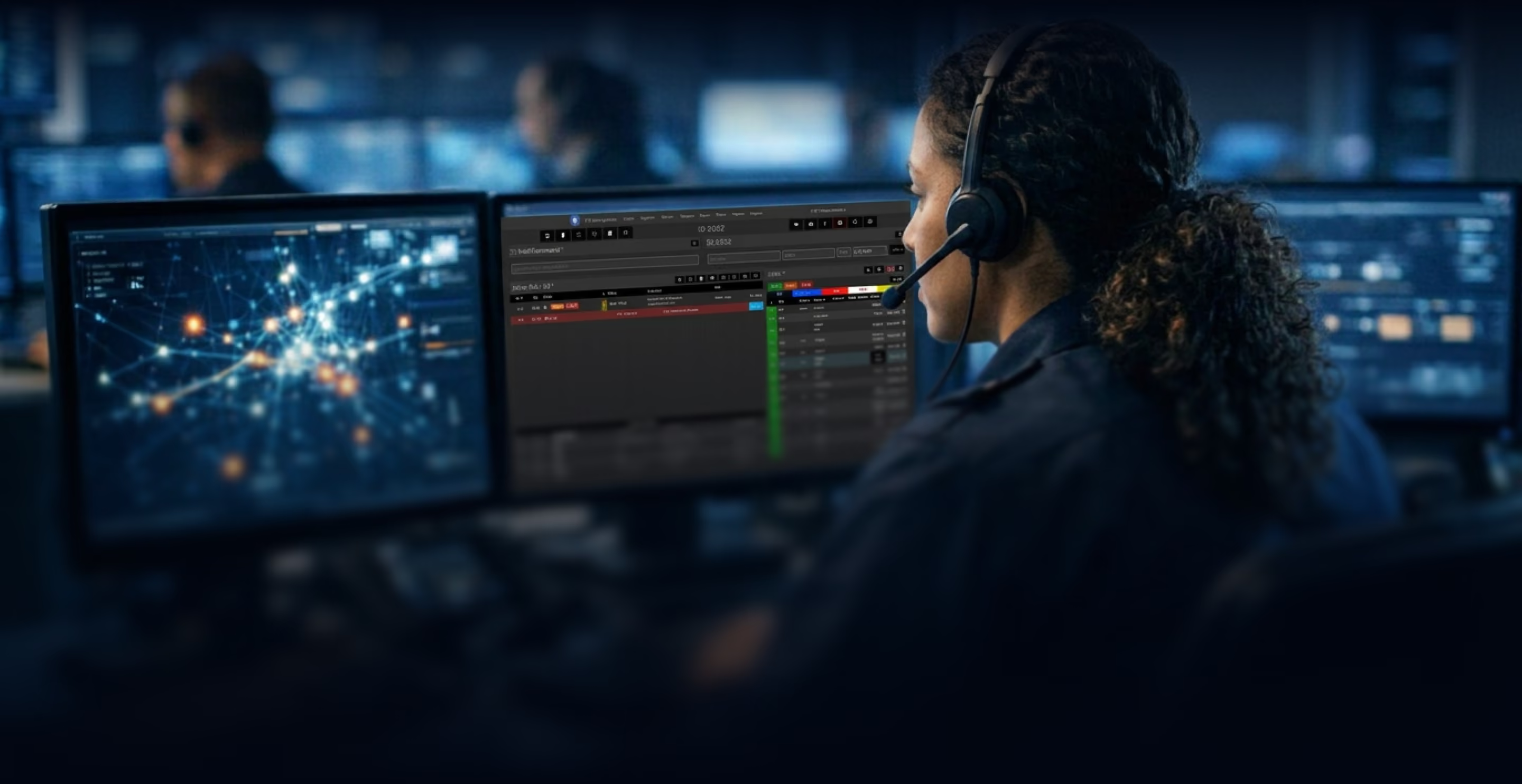
How the system operates in real time
From call intake to reporting in a single cloud platform
Call Intake & Incident Creation
A dispatcher creates an incident from manual entry or a configured call-handling integration. For a reported collision, the incident captures the location and available caller information. Authorized users can follow the incident as details are added.
Key features
Call handling and NG911 integration
Structured incident creation
Automatic caller and location data
Real-time shared visibility
01
Configurable Response Plans Guide Dispatch
For the collision, configurable response plans recommend units using the incident type, location, jurisdiction, and agency protocols. Live unit status and availability help the dispatcher assess the recommended response.
Key features
Configurable run cards and response plans
Multi-agency and mutual aid support
Real-time unit availability
Protocol-aligned dispatch decisions
02
Real-Time Coordination & Shared Situational Awareness
As units are assigned to the collision, authorized dispatchers, supervisors, and field personnel follow the same incident and unit updates. Shared information helps them coordinate as the response develops.
Key features
Real-time incident and unit updates
Coordinated response
Shared visibility across users
Reduced manual updates
03
Field Personnel Connect Directly to the Cloud Platform
Responders access the collision incident from MDTs, tablets, or laptops. They follow dispatch updates and update their unit status in the cloud platform. Field activity carries through to reporting and built-in or configured RMS workflows.
Key features
Device-agnostic access
No proprietary hardware required
Real-time field and dispatch communication
Access from any location
04
Multi-Agency Coordination & Interoperability
If the collision requires partner agencies, CADbridge supports shared awareness between customers using 10-8 Systems CAD. For command staff or external partners who need visibility, SecureLink provides view-only access to call data, comments, and a map through a secure link, with CJIS information automatically redacted.
Key features
SecureLink provides view-only call and map access
Real-time shared incident visibility
CADbridge connects 10-8 Systems customers
Shared awareness for mutual aid response
05
Incident Completion & Reporting
As the collision response is completed, the incident timeline brings together recorded activity and unit updates. Incident data supports reporting and built-in RMS workflows, with connected RMS data exchange determined by the configured integration.
Key features
Automatic incident timeline
Reduced duplicate entry
RMS and reporting integration
Improved accuracy and compliance
06
Open APIs Connect Your Entire Public Safety Ecosystem
Configured integrations can connect the collision workflow with call handling, RMS, analytics, AVL, and regional systems. Available data exchange depends on the connected systems and implementation scope. Explore the integrations page for the supported categories and discuss specific requirements with 10-8 Systems.
Key features
Open APIs
Supports future integrations
Real-time system integration
Avoids vendor lock-in
07


Call intake and incident creation in a shared cloud environment
Call intake brings available caller, location, and incident details into a structured record. Dispatchers can enter information manually; automatic data capture depends on the configured call-handling or NG911 integration. Authorized users follow the incident as it develops. The available fields and partner-agency visibility depend on the agency’s configuration and access permissions. Explore CADbridge, SecureLink, and the integrations page for the sharing and data exchange options described above.
>> 01
Integrated with call handling and NG911 systems
>> 02
Automatic caller and location data integration
>> 03
Structured incident data capture
>> 04